Follow-Up After a Church Event: How to Plan the First Hours Before Opening the Doors
A guide to planning follow-up after a church event, sizing your team’s capacity, and caring for every new contact from the very first hours.
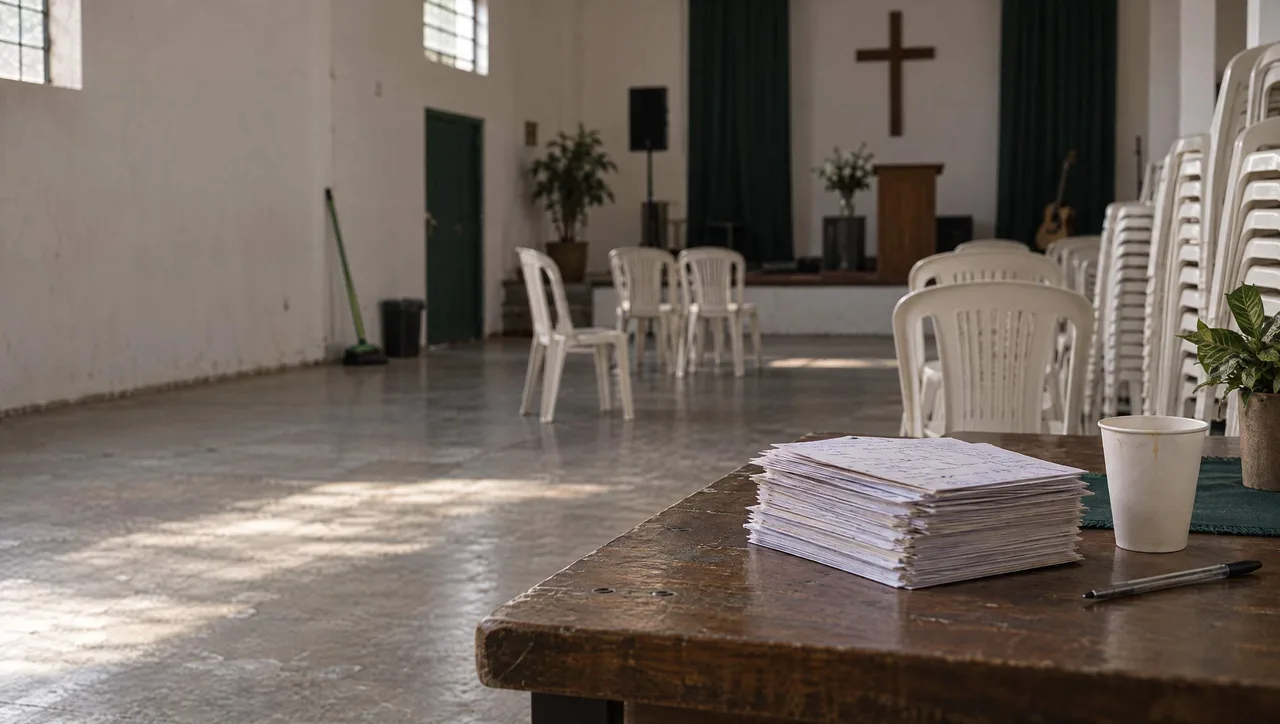
Follow-up after a church event can seem like a small task until a name gets lost among papers, messages, and memories. For weeks, the team prepares the stage, welcome area, sound, and invitations. The gathering ends well, but the next day no one knows who is collecting the information or how it should be distributed.
An event can bring in, in a single afternoon, more contacts than the team usually processes in a month. If the exit process is not designed, the fruit gets trapped between lists and messages. The problem is not a lack of commitment from the team. It is an important responsibility supported by a process that is too fragile.
Bringing order to this area does not make the church feel cold. It allows the church to care with continuity, distribute the workload, and act before silence turns into distance. The goal of this article is to offer criteria that can be applied even with simple tools.
What Gets Planned and What Does Not
Teams usually rehearse everything that happens up to the closing. Follow-up is left for later because it seems administrative. However, the exit is part of the event. Receiving names without preparing responsible people creates a pastoral promise the church may not be able to sustain.
When this part remains implicit, each leader fills in the gaps according to their own experience. One acts right away, another waits for instructions, and another assumes the task belongs to a different area. Making the agreement visible reduces that difference without removing pastoral freedom.
How to Improve This Area: Follow-Up After a Church Event
Real capacity is calculated based on the available companions, the time required for contact, and the number of people each one can care for. This is not a target meant to limit the invitation. It is a measure that helps form the necessary team and avoid improvising when more people arrive than expected.
A useful response must be concrete. It should state what information is reviewed, who takes the next step, and when it will be checked. A criterion that only exists in a coordination meeting becomes weaker when Sunday arrives and the team is working under pressure.
Build the Workload Team Before the Event
Those who collect information should know the form, the validation criteria, and the destination of each record. They also need a closing time and someone responsible for resolving duplicates or incomplete fields. The task should not rest on someone who was already busy throughout the entire day.
It is also helpful to distinguish between informing and accompanying. Informing helps the team see. Accompanying requires a person, time, and a conversation. The record supports the relationship, but it should never be presented as a substitute for human care.
The First Hours Afterward
The first contact should feel personal, not mass-produced. It is wise to confirm that the person got home safely, thank them for coming, and offer a specific next step. Speed matters, but it does not justify cold messages or sequences that ignore what the person shared.
A clear boundary protects everyone. It protects the person from unnecessary questions, the leader from carrying more than they can sustain, and the pastor from finding out too late. Healthy boundaries do not reduce love. They give it a practicable shape.
Measure an Event by What Remained
A full room tells part of the story. It also matters how many people could be contacted, how many agreed to continue, and how many were assigned to a responsible person. This perspective does not reduce the event to numbers. It helps the church know whether it had the capacity to care for what it received.
Improvement happens when the team reviews what occurred without looking for someone to blame. If a step failed, the questions are: what information was missing, where did the delay happen, and what agreement needs to change? That conversation turns an isolated mistake into shared learning.
A Simple Agreement to Start This Week
You do not need to redesign the entire organization in one day. It is better to choose an entry point, test it for a few weeks, and listen to those doing the work. The initial agreement should be brief enough to remember and clear enough to verify.
· Estimate low, medium, and high contact scenarios
· Assign the registration team and the accompaniment team separately
· Prepare human messages and next steps before the event
· Distribute responsibilities during the same day
· Review pending items the next day and at the end of the first week
After applying these steps, the team can review three questions: what arrived on time, what was left without an owner, and what information was requested but never used. The answers make it possible to simplify. A healthy pastoral process does not accumulate fields or meetings; it keeps what helps the church see and care better.
From Individual Effort to a Shared Practice
Faithful teams often compensate for disorder with extra hours. It works for a while, but it depends on the same people and becomes hard to pass on. A shared practice no longer rests on silent heroes. Each member knows what to do, when to ask for support, and how to provide continuity.
INPERIA can help centralize information and organize responsibilities, but it does not replace listening, visiting, or pastoral decision-making. The platform makes sense when it reduces manual transfers and makes the next step visible. The criterion still belongs to the church and to those who know the people.
People are not lost because of a lack of love; they are lost because of a lack of follow-up.
Frequently Asked Questions
Is it a good idea to send the same message to everyone?
There can be a common base, but the greeting and the next step should reflect what the person shared. A mass message does not replace pastoral contact.
What happens if more contacts arrive than expected?
Prioritize the initial confirmation, communicate honestly, and expand the team before promising visits that cannot be carried out.
When does event follow-up end?
When each person has a clear next step or has expressed that they do not wish to continue. The closure should also be recorded so the team does not keep insisting without purpose.
Caring for the Next Step
Pastoral order becomes valuable when someone experiences continuity: they do not have to repeat everything, they receive the promised contact, and they know who is walking alongside them. That experience is born from small decisions the team sustains each week.
A short review also helps sustain the change. The team can meet, look only at pending cases, and agree on what needs support. There is no need to turn that conversation into a long meeting. Clear names, present responsible people, and a date to review what still has not moved forward are enough.
Starting with this point —follow-up after a church event— makes it possible to review a concrete part of care without turning the process into bureaucracy. Fewer handoffs, fewer assumptions, and more clarity to accompany people. That is the kind of order that frees up time for people.
- pastoral follow-up
- church software
- INPERIA
- church growth
- church administration
- church management