When to Multiply a Cell Group: Pastoral Signs More Useful Than Group Size
Signs for deciding when to multiply a cell group, prepare new leadership, and accompany those who might disconnect during the transition.
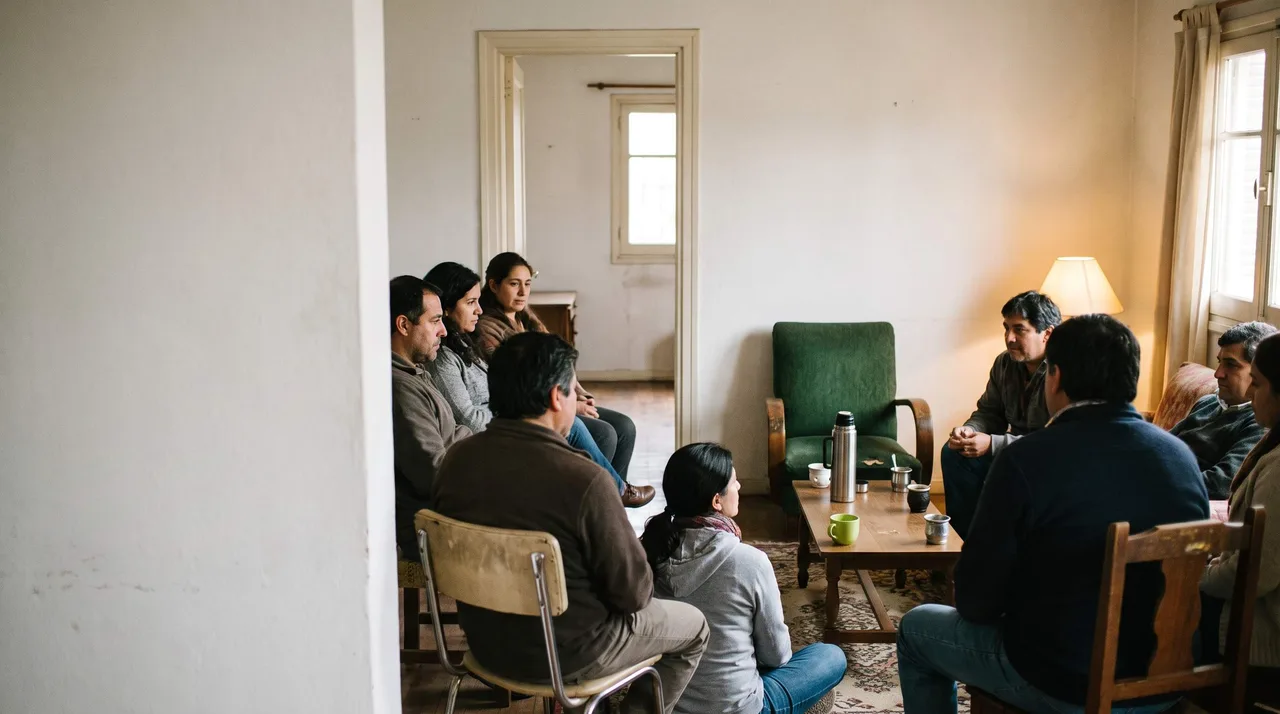
The question of when to multiply a cell group can seem like a small task until a name gets lost among papers, messages, and memories. A cell group reaches twenty people, and pressure to divide begins to appear. There is enthusiasm, but there is still no prepared new leader or stable group able to sustain the change.
Multiplying too soon can weaken two groups. Waiting too long can leave one group without enough space to care well. Size alone does not settle the decision. The problem is not the team’s lack of commitment. It is an important responsibility being carried by a process that is too fragile.
Putting this point in order does not make the church cold. It allows the church to care with continuity, distribute the load, and act before silence turns into distance. The goal of this article is to offer criteria that can be applied even with simple tools.
Why size is not enough as a criterion
Numbers show physical capacity, not relational maturity. A large group may depend on a single family or on a leader who carries everything. Dividing it without looking at those dependencies turns a goal achieved into two fragile spaces.
When this part remains implicit, each leader fills in the gaps based on their own experience. One acts right away, another waits for direction, and another assumes the task belongs to another area. Making the agreement visible reduces that difference without removing pastoral freedom.
How can this area be improved: when to multiply a cell group?
There is a leader in training who is already caring for people, attendance is relatively stable, there are relationships that can support both groups, and guests continue to arrive. There is also a pastoral reason to multiply, not only pressure to reach a number.
A useful answer must be concrete. It should identify what information is reviewed, who takes the next step, and when it will be revisited. A criterion that exists only in a coordination meeting weakens when Sunday arrives and the team is working under pressure.
The leader who is already inside
Multiplication is prepared long before the announcement. The future leader needs to participate in conversations, teach, visit, and receive feedback. When that person appears only on the day of the division, the group feels as if a responsibility is being handed over without a shared history.
It is also helpful to distinguish between informing and accompanying. Informing helps the team see. Accompanying requires a person, time, and a conversation. The record supports the relationship, but it should never be presented as a substitute for human care.
What happens with those who do not follow the new group?
Some people choose to stay because of friendship, schedule, or proximity. Others stop attending during the confusion and remain on a list. It is wise to speak with each family, record their decision, and review the first weeks of both groups.
A clear boundary protects everyone. It protects the person from unnecessary questions, the leader from carrying more than they can sustain, and the pastor from finding out too late. Healthy boundaries do not reduce love. They give it a practicable form.
Accompanying the first weeks
The birth of a new cell group needs presence, not abandonment. The mentor observes attendance, distribution of tasks, integration of guests, and the leader’s load. The mentor also cares for the original group, which may feel a sense of loss even while understanding the purpose.
Improvement appears when the team reviews what happened without looking for someone to blame. If a step failed, the team asks what information was missing, where things were delayed, and what agreement needs to change. That conversation turns an isolated mistake into shared learning.
A simple agreement to start this week
There is no need to redesign the entire organization in one day. It is better to choose an entry point, test it for a few weeks, and listen to those doing the work. The initial agreement should be brief enough to remember and clear enough to verify.
· Identify and train the new leader before setting a date
· Map relationships, schedules, and family locations
· Discuss the transition individually and as a group
· Define who will accompany each group during the first month
· Review attendance and disconnected people on both lists
After applying these steps, the team can review three questions: what arrived on time, what was left without an owner, and what data was requested but never used. The answers make it possible to simplify. A healthy pastoral process does not accumulate fields or meetings; it keeps what helps the team see and care better.
From individual effort to a shared practice
Faithful teams often compensate for disorder with extra hours. It works for a while, but it depends on the same people and becomes hard to pass on. A shared practice no longer rests on silent heroes. Each person knows what to do, when to ask for support, and how to provide continuity.
INPERIA can help centralize information and organize responsibilities, but it does not replace listening, visits, or pastoral decision-making. The platform makes sense when it reduces manual transfers and makes the next step visible. The criterion still belongs to the church and to those who know the people.
People are not lost because of a lack of love; they are lost because of a lack of follow-up.
Frequently Asked Questions
Is there an ideal number for multiplying?
Space and local culture play a role, but the number should never replace signs of leadership, stability, and capacity for care.
Who decides on the multiplication?
It is best for the decision to be made by the leader, their mentor, and the pastoral authority, incorporating real information from the group and not only an annual goal.
What should be done if the new group loses attendance?
Reach out quickly, listen to the reasons, and adjust the schedule, location, or distribution. It is not wise to hide the loss in order to maintain the appearance of success.
Caring for the next step
Pastoral order becomes valuable when someone experiences continuity: they do not have to repeat everything, they receive the promised contact, and they know who is walking alongside them. That experience is born from small decisions the team sustains each week.
A short review also helps sustain the change. The team can meet, look only at pending cases, and agree on what needs support. There is no need to turn that conversation into a long meeting. Clear names, present owners, and a date to look again at what has not yet moved forward are enough.
Starting with this point —when to multiply a cell group— makes it possible to review one concrete part of care without turning the process into bureaucracy. Fewer handoffs, fewer assumptions, and more clarity for accompaniment. That is the kind of order that frees time for people.
- cell groups
- small groups
- leadership
- church members
- church management
- church growth